Real attack runs
The speed, height and dive of a real FPV attack, flown by the autopilot so every serial is the same and scores compare.
An FPV attack drone that flies the same attack every time.
FPV attack drones are the most common threat on today's battlefields. The Lyrebird FPV-1 flies a real FPV attack run and dive at your position, then turns away, the same way every serial.
Represents: FPV strike quadcopters (7 to 10 inch), fibre-optic FPVs and interceptor drones.
Some threats can't be shown on a target. An FPV attack drone comes in fast and low, pops up and dives at you, and that's what your people and systems have to beat. A real FPV strike drone is too costly, and too unpredictable, to lose serial after serial.
The FPV-1 flies that attack on a plan from Lyrebird Mission Software, the same way every time so scores compare, turns away before its target, and is built to be shot down. When it is, the electronics are salvaged and the arms replaced.
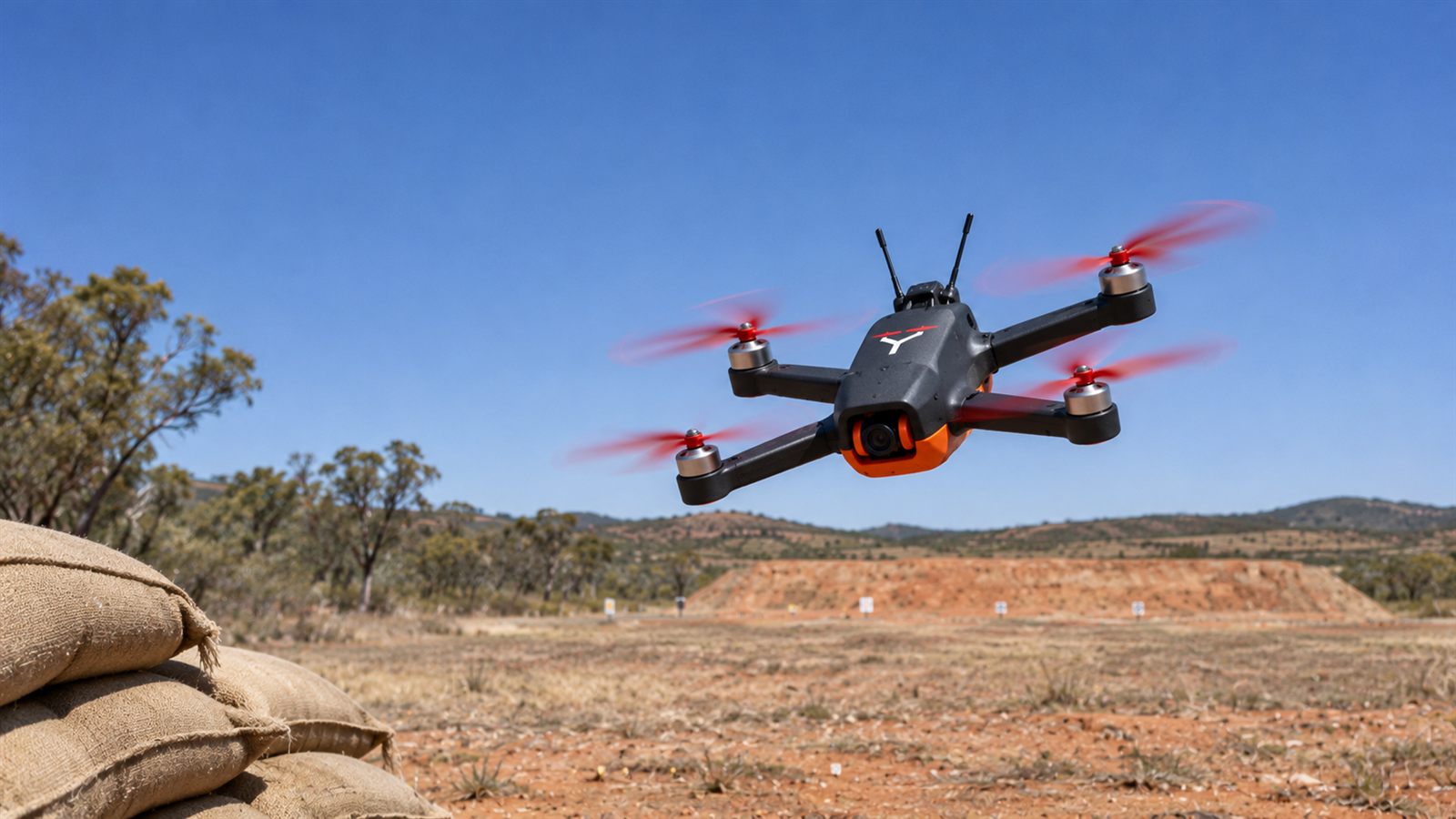 Concept · Lyrebird FPV-1 on the range
The speed, height and dive of a real FPV attack, flown by the autopilot so every serial is the same and scores compare.
Low cost to lose, a bright underside, a buzzer and a last-position report, so it's found and its electronics reused.
Fenced to your range with agreed link-loss behaviour and an independent kill switch, and it always turns away before its target.
Rounds can pass through a small drone without bringing it down, so the FPV-1 scores itself: its flight log records hits as vibration spikes, and a mission kill when it can no longer fly the run.
Concept: the Lyrebird FPV-1 is in development, and hit detection is calibrated in live-fire trials.
Real FPV attacks are often found and cued by a drone overhead. The Lyrebird VTW-1 brings that reconnaissance drone to your exercise or trial, searching, holding over a unit and cueing the attacks.
Flies missions planned in Lyrebird Mission Software, by hand, from your own ground station or with mission autonomy. Every behaviour turns away before its target. Other Lyrebirds: Lyrebird UST-1 · Lyrebird VTW-1 · Lyrebird OWA-1.
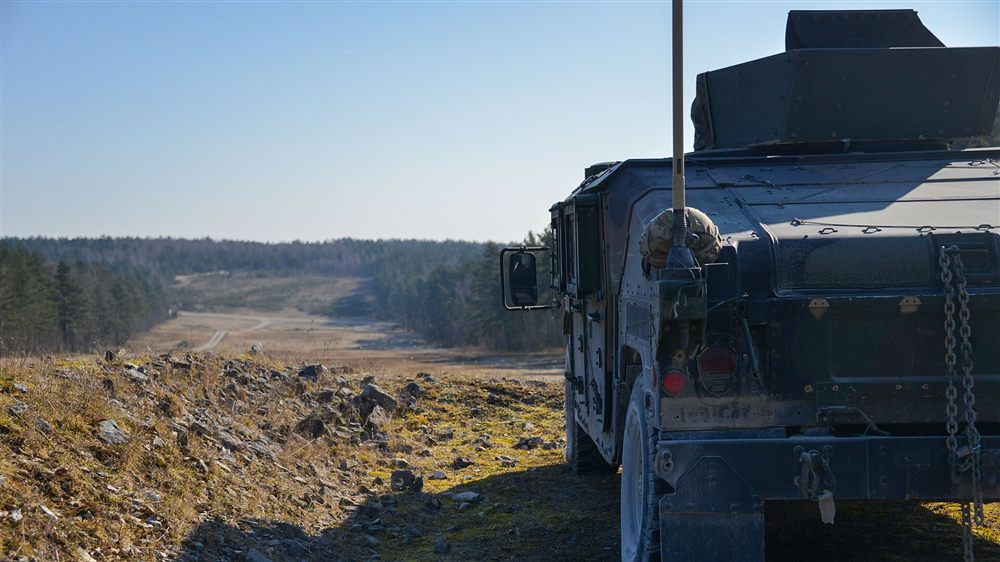 Photo: Spc. Israel Fernandez / U.S. Army National Guard (public domain), cropped
Tell us a little about your training or trials, and what you need to prove, and we'll set up a briefing.
Please don't send classified or sensitive site details by email.