Always turns away before the target
Every behaviour ends by turning away to safety. None completes an attack.
The drones your people and systems will face are cheap and expendable. Your training and trials should be too. Each Lyrebird flies missions planned from what you need to prove, the way the real threat does: how it approaches, how fast and how high, and how it attacks. Use them as the threat in an exercise or a system trial, or as training drones in their own right.
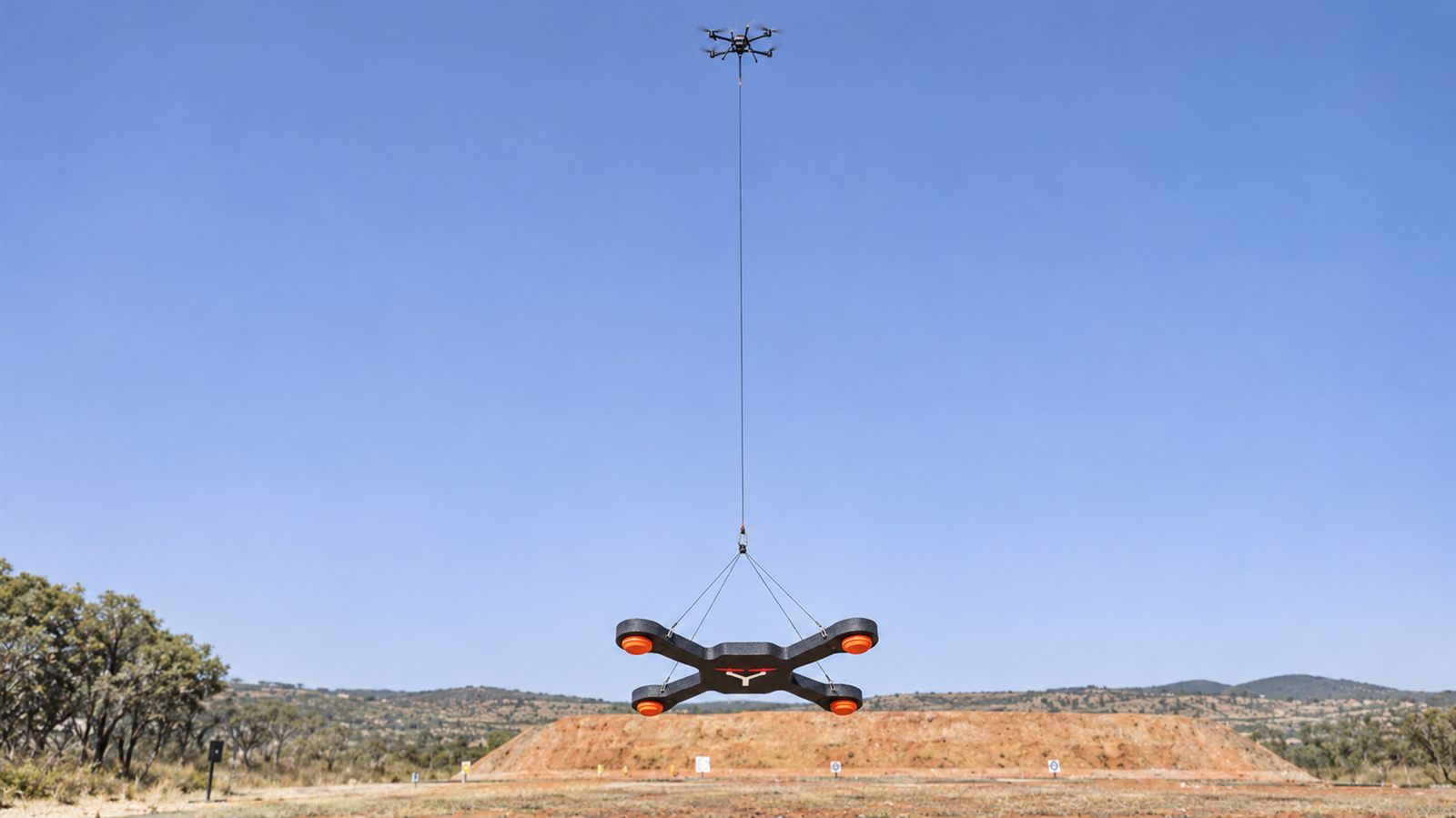
A quadcopter-shaped target carried under a drone, with clay discs that shatter when hit.
See the UST-1 →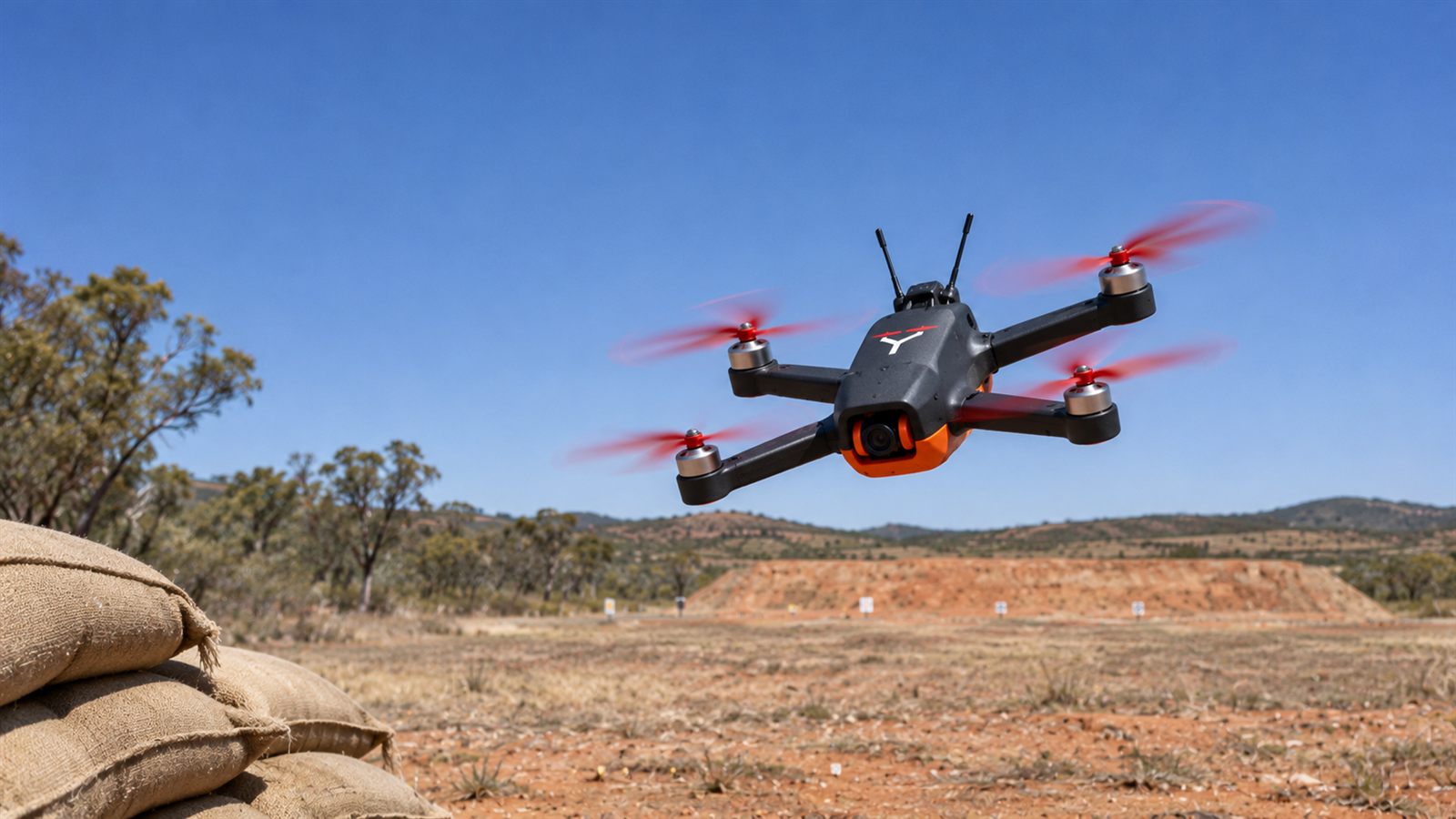
Flies a real FPV attack run and dive at your position, the same way every serial.
See the FPV-1 →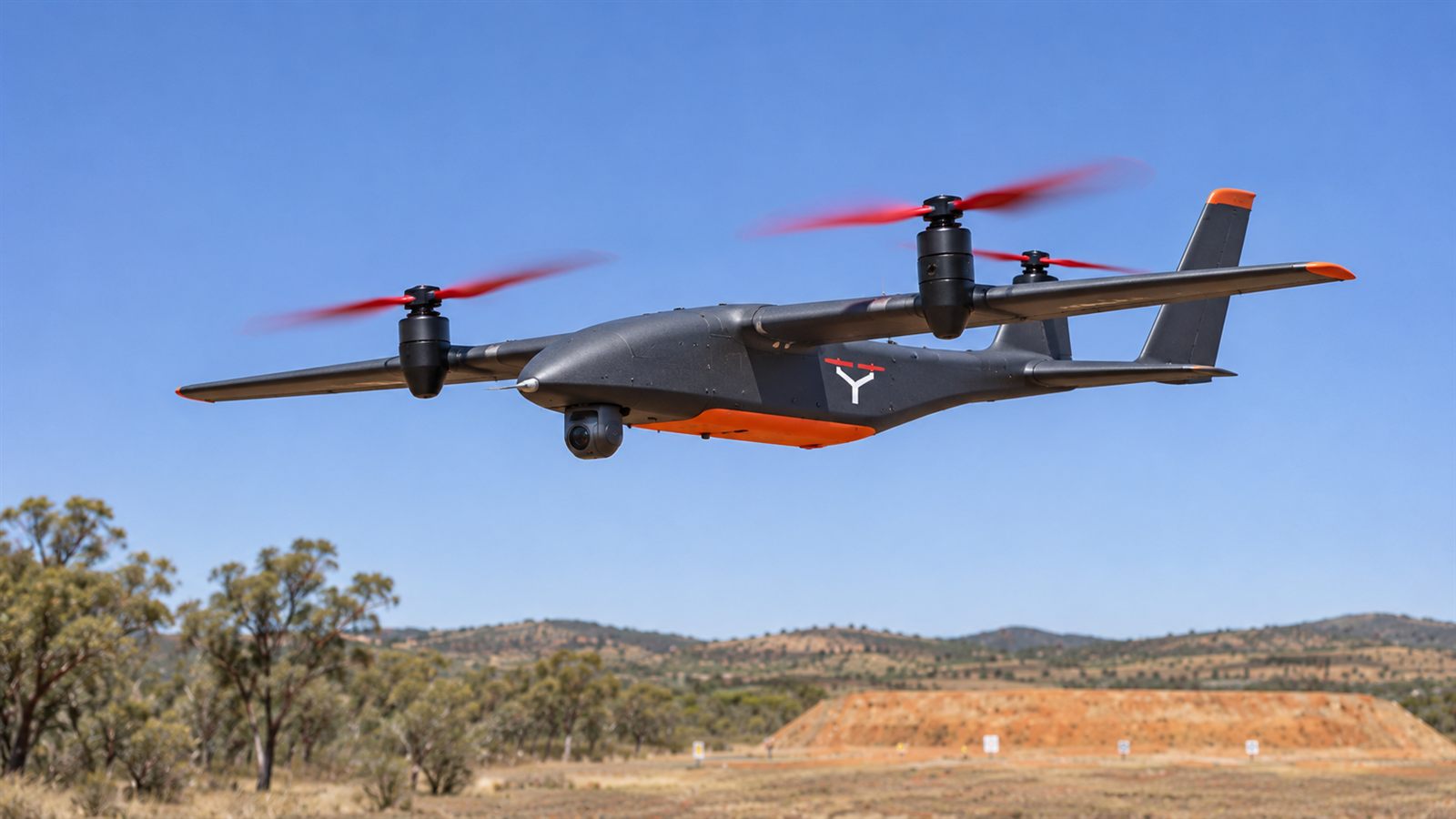
Takes off like a quadcopter, flies like a plane, and watches, finds and cues attacks.
See the VTW-1 →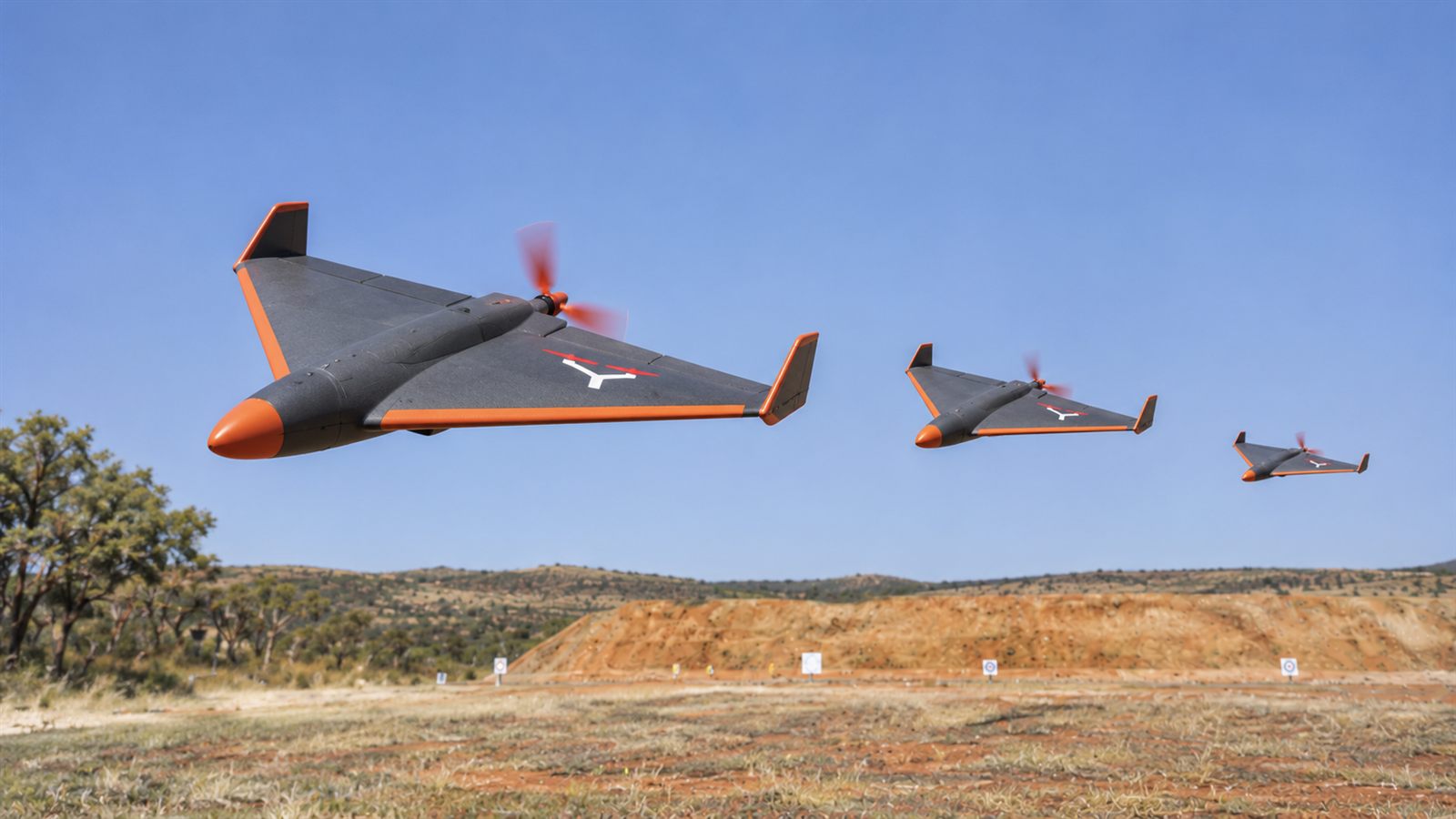
Flies the run in of a one-way attack drone, alone or in waves, then turns away.
See the OWA-1 →All four Lyrebirds are in early access. Every Lyrebird flies missions planned in Lyrebird Mission Software, by hand, from your own ground station or with mission autonomy. More Lyrebirds are on the way, starting with the Lyrebird CQ-1 commercial quadcopter.
Every behaviour ends by turning away to safety. None completes an attack.
Every mission carries your range boundary as a geofence, with return to launch if it's crossed. A mission can’t be exported until its safety checks pass.
Behaviours are built only from public, open-source information, so your whole team can use them without handling classified material.
Each customer's orders and files are sealed off from every other organisation, and every sign-in needs a code from an authenticator app.
Lyrebird Defence is an Australian company, owned and run in Australia, working with Australian Defence, industry and partners.
 Photo: Spc. Israel Fernandez / U.S. Army National Guard (public domain), cropped
Tell us a little about your training or trials, and what you need to prove, and we'll set up a briefing.
Please don't send classified or sensitive site details by email.